
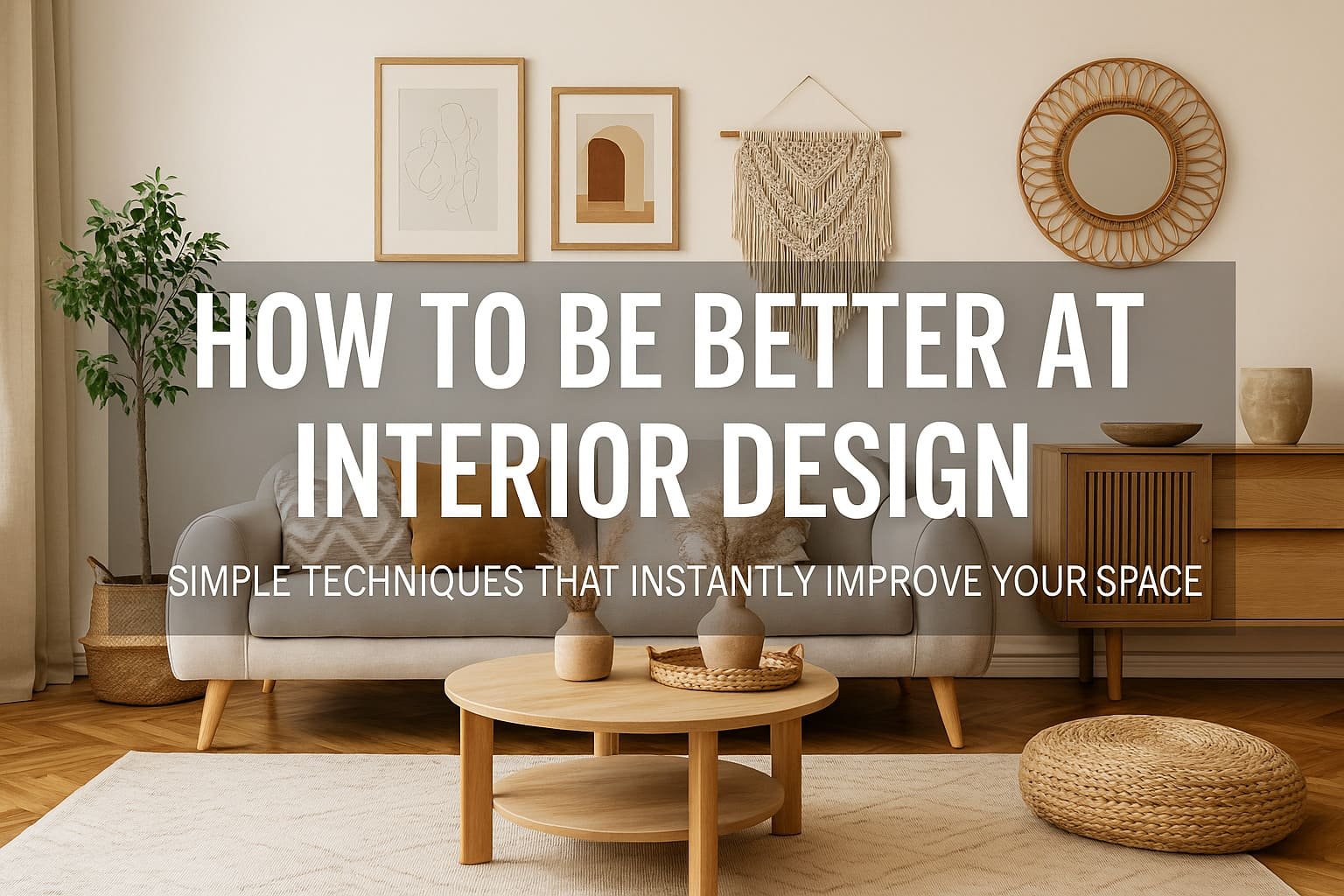
Simple Techniques That Instantly Improve Your Space
Interior design isn’t something reserved for professionals with expensive tools or endless budgets. Anyone can learn how to create a beautiful home with the right mindset, a few guiding principles, and a better understanding of how rooms truly work.
If you’ve ever looked at a room and felt something was “off” — too empty, too busy, too dark, too flat — this guide will help you sharpen your eye and upgrade your decorating skills step by step.
Let’s turn your home into a space that feels stylish, balanced, and uniquely yours.
1. Start With a Clear Vision (Your Mood Board)
Interior design becomes easier when you have a visual roadmap. Before buying anything, create a mood board with:
- Colors you love
- Furniture styles
- Textures (linen, jute, wood, velvet)
- Lighting inspiration
- Pinterest saves / Instagram screenshots
This helps you stay consistent instead of mixing random pieces that don’t match.
A strong mood board is the secret behind nearly every good designer.
2. Choose a Color Palette and Stick to It
Great rooms usually follow a simple rule:
3–4 main colors and nothing more.
Use this formula:
- Base color (60%) → walls, large furniture
- Secondary color (30%) → curtains, rug, large décor
- Accent color (10%) → pillows, art, small details
This keeps your home looking intentional rather than chaotic.
If you’re unsure, safe choices are:
neutral beige, warm white, soft gray, sage green, or muted terracotta.
3. Focus on Lighting — The Secret Weapon
Lighting transforms a room more than any furniture piece.
To get it right, layer your lights:
- Ambient light → ceiling lights, natural daylight
- Task light → reading lamps, kitchen lights
- Accent light → warm lamps, LED strips, lanterns
Warm lighting (2700K–3000K) instantly makes a home feel cozy and professionally designed.
Bad lighting = bad design.
Good lighting = luxury feeling, even on a low budget.
4. Use the Rule of Balance and Proportion
Most beginner mistakes come from wrong proportions:
- A tiny rug in a big room
- A huge sofa squeezed in a small space
- Wall art too high or too small
Here is the designer cheat sheet:
- Rugs should touch at least the front legs of furniture
- Wall art should be at eye level
- Tall items (plants, lamps) help balance low furniture
- Large rooms need large pieces, not many small ones
When proportions are right, the whole room feels instantly better.
5. Add Texture to Avoid a Flat or “Empty” Look
If your room feels boring, the solution is almost always texture.
Add:
- Knitted pillows
- Linen curtains
- Woven baskets
- Wood furniture
- Plants
- Rugs with depth
- Wall art
Texture adds warmth and dimension — it turns a normal room into a designer room.
6. Declutter Strategically (Not Minimalism — Smart Placement)
A clean space automatically looks more stylish.
But you don’t have to become a minimalist.
Use smart storage:
- Baskets
- Floating shelves
- TV consoles with doors
- Decorative boxes
Hide the mess, display the beauty.
Professional designers make rooms look effortless because everything has a place.
7. Add Personality With One “Signature Element”
Every room deserves a moment that feels unforgettable.
Try one of these:
- A large art piece
- A bold rug
- A dramatic light fixture
- A unique chair
- A textured headboard
- A gallery wall
One statement item makes your space feel curated, not generic.
8. Don’t Rush — Build Your Home Slowly
Design is not a race.
Some of the most beautiful interiors evolve over months, not days.
Take your time:
- Live in the space
- Understand your habits
- Add pieces gradually
- Replace what feels wrong
The goal is not perfection — it’s harmony.
Conclusion
Becoming better at interior design doesn’t require special talent.
It’s about understanding balance, light, color, texture, and knowing how to create a home that supports the way you live.
With a few intentional steps — and a bit of creativity — you can transform any space into something warm, stylish, and truly meaningful.
Your home should feel like a reflection of you.

Great advice. I love it. Thank you.